

A charging cable is one of those little things we hardly notice until it stops working. It sits beside the bed, disappears into a backpack, gets pulled from behind a desk, and somehow ends up twisted around three other things.
Then one morning, your phone refuses to charge unless you hold the connector at a very particular angle. We’ve all had that annoying moment, haven’t we?
This is where a braided USB-C cable can make a real difference. Unlike an ordinary plastic charging cord, a braided cable has a woven outer covering that helps protect it against everyday wear, rubbing, and repeated bending.
It isn’t indestructible, of course, but its construction can give it a meaningful advantage over cheaper, less-protected alternatives.
The difference becomes even more important when you’re charging expensive devices, such as a laptop, tablet, or smartphone, several times a day.
A reliable cable isn’t just about keeping your battery full. It’s also about convenience, dependable performance, and not having to shop for another replacement every few months.
So, why does a braided USB-C cable last longer than standard charging cords? The answer lies in its materials, construction, reinforced connections, and the way it handles the small stresses of daily life.
Let’s look at what actually makes these cables worth considering, without getting lost in technical jargon.
1. What Makes a Braided USB-C Cable Different?
At first glance, a braided cable may look like a regular charging cord with a slightly fancier jacket. Look closer, though, and you’ll find a different approach to cable construction.
A typical inexpensive charging cord has a smooth plastic or rubber-like outer covering. A nylon braided USB-C cable, on the other hand, features woven strands wrapped around its underlying cable structure.
These strands form an additional protective layer that can resist abrasion and help the cable maintain its shape during regular use.
Think of it like the difference between wearing a thin shirt and putting on a durable jacket. Both serve a purpose, but the extra layer provides another line of defence against the little things that cause damage over time.
Here are some of the key differences:
- Woven nylon: Provides an outer layer that helps resist scuffs, rubbing, and everyday surface wear.
- Flexible cable design: Allows the cord to bend and move around furniture, charging stations, and bags.
- Inner wire protection: The outer braid helps shield the underlying insulation from direct contact with rough surfaces.
- Reinforced cable ends: Quality models may include extra strain relief where the cable meets the connector.
- Durable connectors: Some cables use aluminum alloy connectors or housings to improve resistance to scratches and everyday handling.
Not every braided cord includes all these features, and the quality of the materials matters. Still, combining a protective jacket with well-designed connectors can help create a more durable USB-C charging cable.
2. Nylon Braiding Helps Prevent Everyday Wear and Tear
One of the biggest reasons a braided USB-C cable lasts longer is its resistance to ordinary physical damage. Charging cables are constantly dragged across desks, rubbed against backpack zippers, squeezed between cushions, and pulled across bedside tables.
Over time, these repeated interactions can wear away the outer coating of a standard cord. Small cracks may develop, particularly in places where the cable bends frequently. Once the outer insulation becomes damaged, the internal structure can become more vulnerable.
Nylon braiding provides an extra layer between the cable and its surroundings. The woven surface helps distribute friction across the jacket instead of allowing every scrape to affect the underlying insulation directly.
That doesn’t mean a braided cord can survive being crushed under a chair or dragged over sharp metal edges without consequences. It simply has a protective advantage in many ordinary situations.
For people who charge their phones at work, at home, and while travelling, this added resistance can be especially useful. A cable that spends its life moving between different places faces far more physical stress than one that remains permanently connected to a desk.
3. Better Bend Resistance Protects the Cable’s Weakest Areas
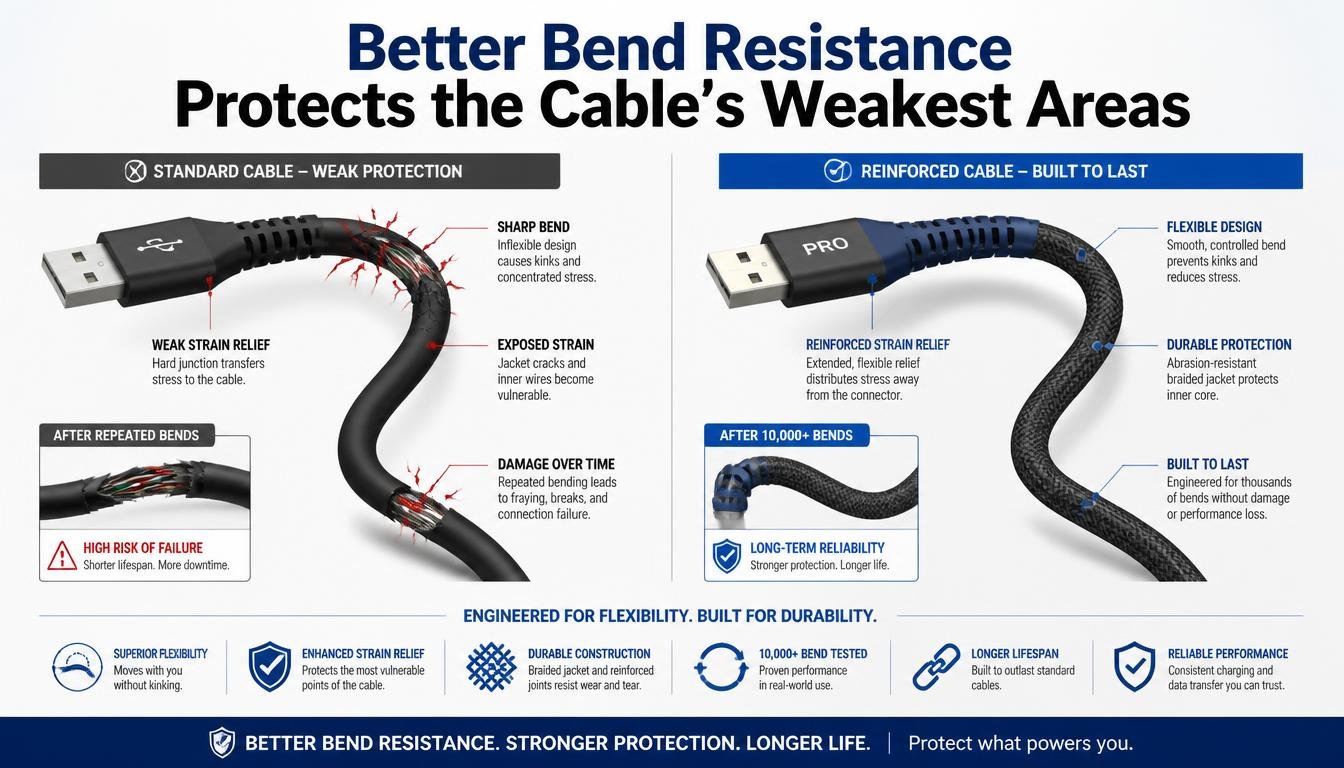
Most charging cables don’t fail in the middle. More often, trouble begins close to the connector, where the cable repeatedly bends as you plug in your device, pick it up, or move it around.
Imagine charging your phone while watching a video in bed. The connector points sideways, the cable curves over your hand, and every small movement puts pressure on the same section. Do that night after night, and the strain starts adding up.
A durable USB-C charging cable is designed to handle this sort of repeated movement more effectively. Braided construction can help the outer jacket resist damage, while flexible materials and properly engineered strain relief can reduce stress around the connector.
Strain relief is the thicker, flexible section that joins the cable to the plug. It allows the transition from a rigid connector to a flexible cord to happen more gradually, rather than forcing the cable to bend sharply at one tiny point.
This is an important distinction: braiding alone doesn’t guarantee excellent bend resistance. The internal conductors, insulation, flexibility, and strain-relief design all contribute to the cable’s lifespan.
Some manufacturers advertise cables tested for more than 10,000 bends. Such a number can be useful when supported by a documented test method, but it isn’t a universal standard for every braided cable. Always check the specifications of the particular product you’re considering.
4. Braided Cable vs. Standard Charging Cord: Which Holds Up Better?
Choosing between a braided cord and a conventional plastic-covered cable often comes down to how you use your devices.
A basic charging cable may be perfectly adequate for occasional use. If it stays in one place and rarely gets moved, you might not notice much difference.
However, frequent travellers, students, remote workers, and people who carry their chargers everywhere may benefit more from a reinforced design.
Here’s a practical comparison.
| Feature | Braided USB-C cable | Standard plastic charging cord |
| Outer protection | Woven layer helps resist abrasion | Depends on the thickness and quality of the coating |
| Fraying resistance | Often better against surface wear | Coating may crack or split with age |
| Bend durability | Depends on braid, core, and strain relief | Varies by construction and materials |
| Tangle resistance | May resist some twisting, but can still tangle | Can also be flexible and easy to coil |
| Appearance | Textured, often more premium-looking | Usually smooth and simple |
| Weight and flexibility | May be heavier or stiffer | Often lighter and softer |
| Price | Frequently costs more | Often available at lower prices |
| Long-term value | Potentially better with frequent use | Can be economical if it lasts well |
The important word here is potentially. A poorly made braided cord can fail sooner than a high-quality standard cable. A woven jacket is one advantage, not proof that every part of the product is better.
If your current cable gets damaged because it is repeatedly bent near the plug, look for strong strain relief alongside a braided jacket. If it wears out because you drag it across rough surfaces, abrasion-resistant construction is a more relevant feature.
In other words, buy for the problem you actually have, not just for the appearance.
5. Reinforced Cable Ends Can Make a Big Difference
There’s a reason cable manufacturers often focus on the connector area when discussing durability. The plug is rigid, the cord is flexible, and the point where they meet experiences repeated mechanical stress.
When that transition isn’t designed properly, bending may concentrate on a very small section of the cable. Eventually, the insulation or internal conductors can become damaged, leading to intermittent charging or complete failure.
Many well-designed braided cables include reinforced cable ends and extended strain relief to address this issue. Some also feature aluminum alloy connector housings, which can provide a sturdy exterior and resist ordinary scratches.
Aluminum alloy connectors don’t automatically make a cable more electrically reliable, though. The quality of the USB-C contacts, solder joints, internal wiring, and assembly matters just as much.
A useful buying tip is to inspect the point where the cable meets the connector. Does it have a smooth, flexible transition? Is the connector securely attached? Does the product description mention bend testing or reinforced joints?
These little details are often more meaningful than a flashy product photo showing the braid alone.
6. Why a 100W USB-C Cable Needs More Than a Tough Exterior
Durability matters, but a charging cable also has to deliver the power your device needs. This is especially important when choosing a 100W USB-C cable for a laptop or other high-power device.
A USB-C connector describes the physical connection. It doesn’t automatically tell you the maximum charging power, data-transfer speed, or capabilities supported by the cable.
For example, a USB-C to USB-C cable may work with a smartphone, tablet, or laptop, but its supported power level depends on its design and specifications.
A cable intended only for lower-power charging shouldn’t be assumed to support a 100W laptop charger.
For a cable rated at 100W using USB Power Delivery, the familiar specification is 20V/5A. At that combination of voltage and current, the cable can support up to 100 watts under the appropriate charging conditions.
A suitable high-power cable must be designed to handle that current safely. Its outer braid doesn’t determine its electrical rating, and a thick-looking cable isn’t necessarily a high-wattage cable.
When shopping for a 100W USB-C to USB-C cable, look for:
- A clearly stated maximum power rating.
- Support for USB Power Delivery (USB PD) at the level you need.
- An E-Marker chip when required for the cable’s advertised high-current capability.
- Suitable connectors and internal conductors.
- Manufacturer documentation confirming the stated specifications.
A quality cable combines physical durability with appropriate electrical design. That’s what makes it a practical long-term charging accessory rather than simply a cord that looks tough.
7. Understanding USB-C Power Delivery and the E-Marker Chip
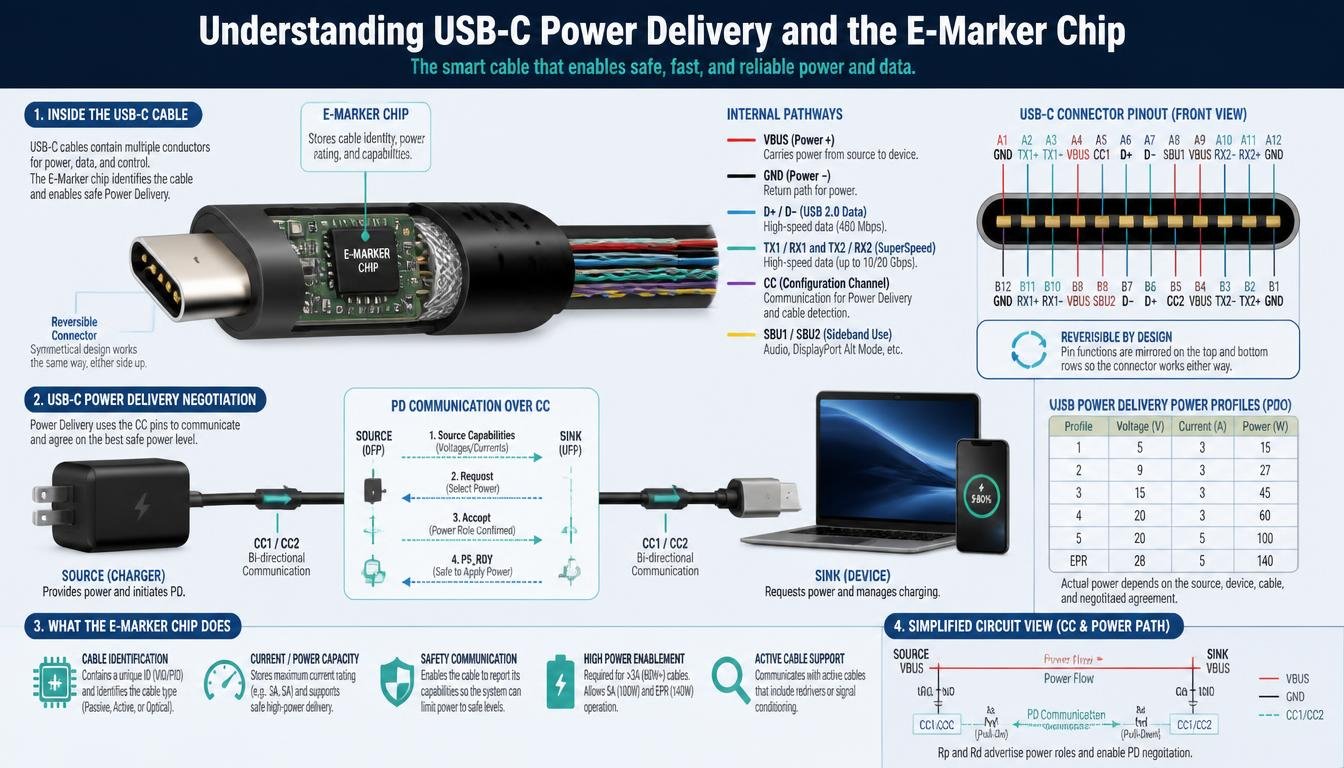
The technology inside a USB-C cable is another part of the durability and reliability conversation, although it serves a different purpose from the braided jacket.
USB-C Power Delivery (USB PD) is a charging protocol that allows compatible devices and chargers to negotiate appropriate power levels. Instead of every device receiving the same fixed amount of power, the charger and device can establish a supported charging arrangement.
A USB-C PD cable must be suitable for the power requirements of the devices being connected. Higher-power charging can require specific cable capabilities, and not every cable supports every charging level.
An E-Marker chip is an electronic identification component used in certain USB-C cables. It communicates information about the cable’s capabilities, including relevant current and other supported operating characteristics.
A cable designed for 5A operation generally requires an appropriately marked cable.
You may also see the term USB PD 3.0 in product descriptions. It refers to a version of the Power Delivery specification, while PPS, or Programmable Power Supply, is an optional charging feature associated with compatible equipment.
PPS allows supported chargers and devices to adjust charging voltage in smaller increments. However, buying a cable that mentions PPS doesn’t guarantee that your phone will use that feature.
The charger, phone, cable, and charging protocol all need to support the relevant functions.
Most importantly, an E-Marker chip doesn’t make a cable physically indestructible. It helps identify electrical capabilities, while the braid, internal construction, and strain relief address different concerns.
A dependable charging cable needs both appropriate electrical specifications and sound physical construction.
8. Does a Braided Cable Charge Your Phone Faster?
This is one of the most common misunderstandings about braided charging cords. People sometimes assume that because a cable is thicker, heavier, or more expensive, it must charge their devices faster.
Not necessarily.
Charging speed depends on several factors, including the charger’s output, the device’s charging limits, the cable’s supported current and power, and the charging protocol being used.
A well-made braided cable with the correct specifications can support fast charging just as effectively as a suitable non-braided cable. The braid itself doesn’t create additional charging power.
For instance, a USB-C fast charging cable intended for a compatible high-power charger can be useful for phones, tablets, and laptops, provided its rating matches the device’s requirements.
But a cable rated for lower power won’t magically become a fast-charging cable because it has a woven nylon exterior.
A cable advertised as supporting 100W may also offer only basic data transfer. Power delivery and data speed are separate specifications, so check both if you need a multipurpose cable.
If your phone charges slowly, first check the charger, device compatibility, and cable rating. Replacing a worn cable can solve a charging problem, but switching from plastic to braided construction alone won’t guarantee a speed increase.
9. Data Transfer: What Does 480Mbps Actually Mean?
Many USB-C cables support charging and data transfer, which makes them useful for more than powering a battery. You can use a compatible cable to connect a phone to a computer, transfer photos, or connect certain accessories.
However, not all USB-C cables offer the same data capabilities.
A cable advertised as supporting 480Mbps data transfer generally corresponds to USB 2.0 data signalling speeds.
This can be adequate for basic file transfers, syncing, and everyday connectivity, but it may feel limiting when transferring large video files or extensive collections of photos.
A braided jacket doesn’t automatically improve data speed. The cable’s internal wiring and supported USB specification determine what data rates it can handle.
Before buying, consider how you’ll use it:
- For charging a phone overnight, basic data capabilities may be enough.
- For connecting a tablet to a computer, check the data rate required by your workflow.
- For frequent large-file transfers, consider a cable with a faster supported data standard.
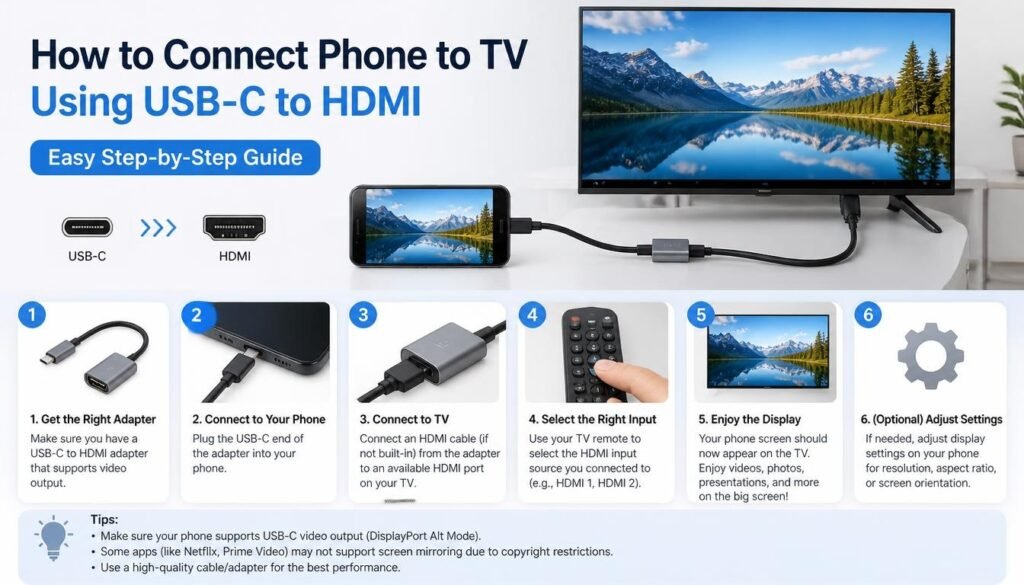
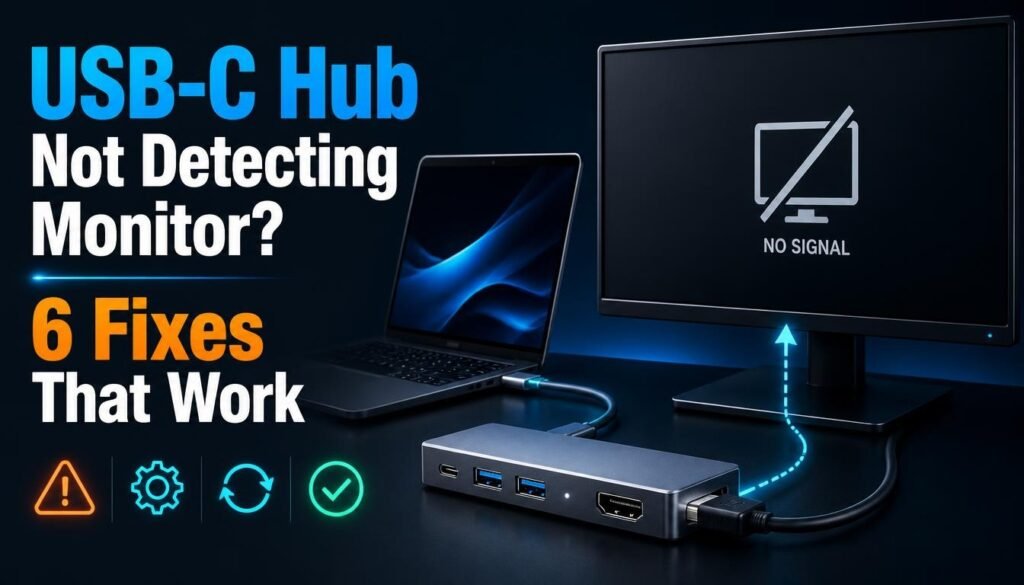
- For an external display, verify that the cable supports the required video capabilities, because not every USB-C cable carries video.
A good USB-C charging and data cable should clearly state both its power rating and its data capabilities. If a listing highlights 100W charging but says very little about data, don’t assume it supports high-speed transfers.
10. Compatibility With Smartphones, Tablets, and Laptops
One reason the USB-C connector has become so useful is its presence across many different device categories. A suitable cable can simplify charging by allowing you to use one connection type for multiple devices.
Depending on their charging ports and supported standards, compatible devices may include:
- MacBook Pro and MacBook Air laptops.
- iPad Pro tablets with USB-C ports.
- Microsoft Surface Pro devices with compatible USB-C charging support.
- Chromebooks with USB-C charging.
- Samsung Galaxy smartphones with USB-C ports.
- Google Pixel phones and compatible tablets.
- OnePlus smartphones that support USB-C charging.
Older devices, including some Samsung Galaxy S8, S9, S10, S20, and Note10 models, use USB-C ports, but their supported charging rates vary. Likewise, the capabilities of Google Nexus products, older Microsoft Surface models, and different generations of Apple devices aren’t all identical.
A braided USB-C cable for MacBook Pro and iPad Pro can be a convenient option if its power and data specifications meet the needs of both devices. The same principle applies to a Samsung Galaxy charging cable or a cable intended for a Google Pixel phone.
One detail is worth remembering: USB-C compatibility doesn’t mean universal support for every feature. Some devices use proprietary fast-charging technologies or require particular charger capabilities to reach their maximum charging speeds.
Check your device’s specifications before purchasing. A cable can fit perfectly and still fail to deliver the power or data performance you expect.
11. Tangle Resistance Makes Everyday Use Less Frustrating
Durability isn’t only about preventing visible damage. It’s also about how easily a cable fits into everyday routines.
A tangle-resistant USB-C cable can be particularly helpful for people who travel frequently, work in shared spaces, or carry chargers in a backpack. Braided jackets often have a textured surface that feels more substantial and may help the cable retain its shape during handling.
Some designs also resist kinking better than certain inexpensive plastic cords. But no braided cable is completely immune to knots, twisting, or awkward coiling.
Picture the usual travel situation: you’re sitting in a hotel room, your laptop battery is running low, and your charger has somehow become tangled with your headphones and a spare cable.
A flexible cord that’s easy to coil and unpack makes that small inconvenience a little less irritating.
For better everyday handling, loosely coil the cable in a circle rather than wrapping it tightly around the charger. Avoid sharp folds, and don’t pull the cable out of a bag by its connector.
These habits help preserve both braided and standard cables, although the added protective jacket of a well-made braided model may provide another advantage against surface wear.
12. Is a Braided USB-C Cable Worth the Extra Cost?
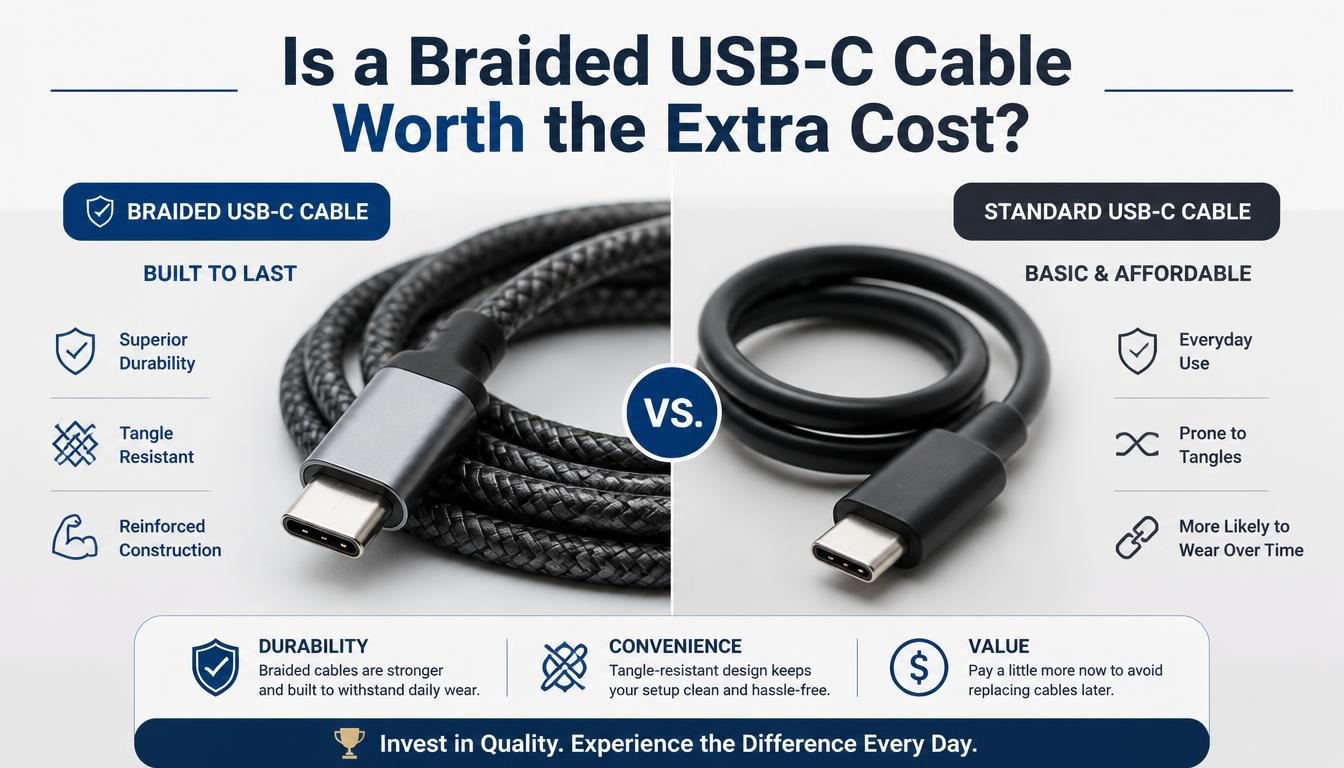
A braided cable often costs more than a basic plastic cord, which naturally raises a fair question: is the extra money worthwhile?
The answer depends on how often you use it, how rough your everyday routine is, and the quality of the cable you’re comparing it with.
Suppose a cheap cable becomes unreliable after several months of being stuffed into a backpack and bent near the plug. Replacing it repeatedly can become more expensive and inconvenient than buying a better-constructed option at the beginning.
A long-lasting USB-C cable may offer better value if it survives that kind of use for longer. It can also save time spent troubleshooting unreliable charging and looking for another replacement when you need one most.
Still, price alone isn’t proof of quality. Some expensive cables have little to offer beyond appearance, while a well-made standard cable may last for years.
When comparing products, look for a combination of:
- A clearly documented power rating.
- Appropriate data-transfer specifications.
- Quality braiding and flexible cable materials.
- Reinforced strain relief.
- Well-fitted connectors.
- Transparent manufacturer information and a reasonable warranty.
If you only charge a phone at a bedside table, a basic cable may be all you need. If you regularly travel with a laptop, tablet, and smartphone, investing in a reinforced charging cord may make more sense.
The best choice is the one that performs reliably in your actual routine, not simply the one with the longest feature list.
13. How to Make Your Braided Charging Cable Last Even Longer
Even the toughest cable benefits from a little care. Braided construction reduces certain types of wear, but it can’t compensate for every form of misuse.
The good news is that a few simple habits can help protect your investment.
Pull the connector, not the cable. When unplugging your phone or laptop, hold the plug itself. Pulling on the cord puts unnecessary strain on the connection between the cable and its connector.
Avoid sharp bends. Don’t force the cable into a tight angle near the plug, especially while charging. Repeated sharp bending can damage internal conductors even when the outer braid looks fine.
Store it loosely. Coil the cable into a relaxed loop. Tight wrapping, hard creases, and heavy objects pressing on it can gradually affect its structure.
Keep connectors clean. Dust and debris around USB-C ports can interfere with the connection. Inspect the cable and device port occasionally, and avoid inserting metal objects or liquids into the connector.
Use an appropriate charger. A durable outer jacket doesn’t guarantee electrical safety. Choose a reputable charger and a cable rated for the power your device requires.
Replace damaged cables. If the connector becomes loose, charging repeatedly disconnects, the cable becomes unusually hot, or internal wires are exposed, stop using it. A braided exterior can hide damage beneath the surface, so appearance alone isn’t a reliable safety check.
With these habits, you can help your cable deliver dependable service for longer, whether you use it for a phone, tablet, or laptop.
14. What to Look for When Buying a Durable Braided USB-C Cable
Shopping for a new charging cord can be surprisingly confusing. Product descriptions are full of phrases such as heavy-duty, ultra-durable, premium nylon, and super-fast charging. Some are useful, while others tell you very little about actual performance.
Start by identifying your main purpose. Do you need a lightweight smartphone cable, a high-power laptop charging cable, or one cable that can handle several compatible devices?
For laptop charging, a 100W USB-C PD cable may be suitable if your charger and device support that power level. If you need a 240W cable for a higher-power device, look for the appropriate rating rather than assuming that every braided cable supports it.
Next, check the materials and construction. Woven nylon can offer good abrasion resistance, while quality strain relief can help protect the connector area. Aluminum alloy housings may improve physical sturdiness, but the entire connector assembly still matters.
If you transfer files, check whether the cable supports 480Mbps, a faster USB data rate, or another specific standard that suits your needs. If you depend on high-power charging, look for clear documentation about the current rating and any required E-Marker support.
Finally, treat extreme durability claims with a little healthy skepticism. A statement such as “survives 10,000 bends” is most useful when the manufacturer explains its testing conditions. Bend angle, applied force, test speed, and the point at which failure is measured can all influence the result.
The ideal cable isn’t necessarily the thickest or most expensive. It’s the one whose verified specifications, construction quality, and flexibility match the way you use your devices.
Frequently Asked Questions
Do braided cables last longer
Yes, braided cables generally last longer than standard plastic cables because their woven outer layer helps protect against bending, fraying, and everyday wear and tear.
Are braided cables more durable
Yes, braided cables are usually more durable because their nylon or braided outer covering provides extra protection against tangling, twisting, and repeated bending.
Read More: https://techbiton.com/lionwei-docking-station-driver-download-center/
Conclusion: A Small Upgrade That Can Make Everyday Charging Easier
A braided USB-C cable lasts longer than many standard charging cords because its woven outer layer can provide better protection against abrasion and everyday surface wear.
When that jacket is combined with flexible materials, reinforced connector ends, and sound internal construction, it can offer a practical advantage for people who use their cables constantly.
But the braid is only part of the story. Charging performance depends on the cable’s electrical specifications, supported USB Power Delivery capabilities, connector
quality, and compatibility with your device. A strong exterior means little if the cable can’t safely deliver the power you need.
For frequent travellers, laptop users, students, and anyone tired of replacing worn charging cords, a well-made braided cable can be a sensible investment. For occasional charging at home, a quality standard cable may serve just as well.
The smartest choice is to balance durability, performance, flexibility, and price. Check the specifications, avoid exaggerated claims, and take care of whichever cable you choose.
After all, a charging cable is a small accessory, but it plays a surprisingly important role in keeping our everyday lives connected.
Choosing one that’s built for your routine can mean fewer interruptions, less waste, and one less little frustration to deal with when your battery is running low.