Technology used to feel like something that lived inside laboratories, factories, universities and very serious-looking rooms full of blinking machines.
Now it lives in our pockets, watches our homes, helps businesses make decisions, translates languages, writes computer code, recommends what we watch and sometimes answers questions before we have even finished asking them. That change didn’t happen overnight, but somehow we woke up in the middle of it.
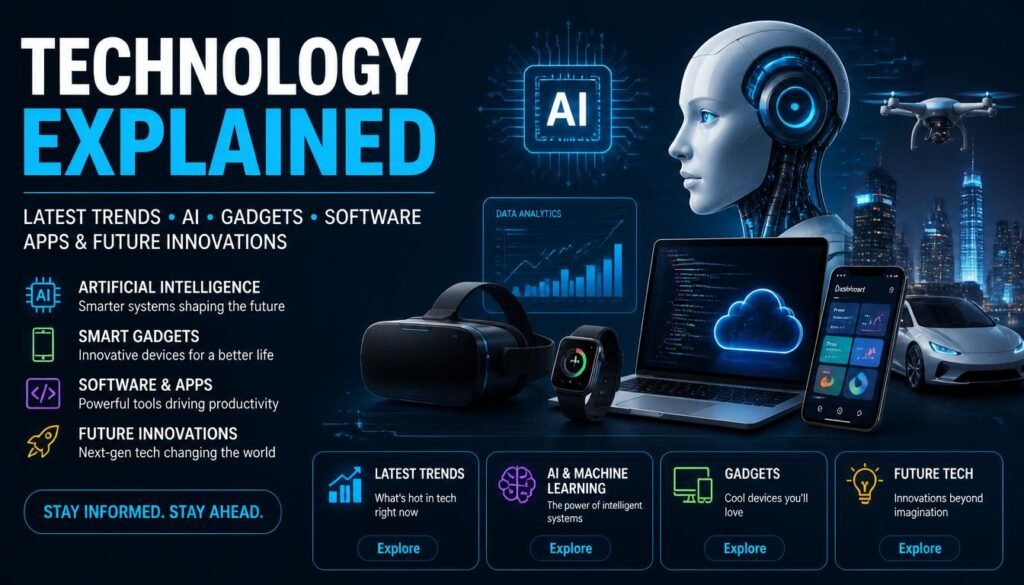
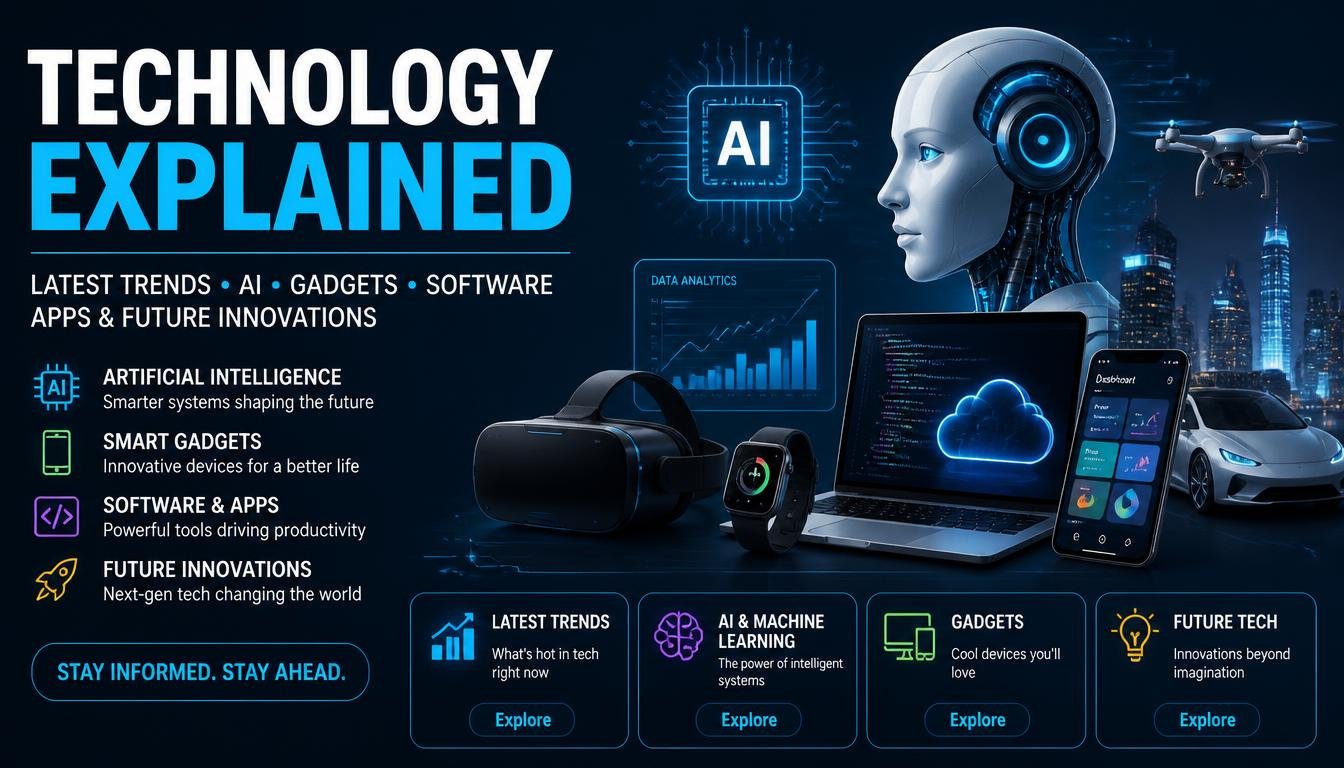
Modern Technology is no longer one simple category. It is a giant ecosystem where Artificial Intelligence, Machine Learning, Software Development, Cloud Computing, smartphones, robotics, telecommunications, cybersecurity and advanced hardware continuously influence one another.
A new processor can make AI more capable, while better AI can make software easier to build, and better software can make an ordinary device feel surprisingly intelligent.
The year 2026 is particularly interesting because several technology trends are developing at the same time.
Generative AI, Large Language Models, AI Agents, Agentic AI, multimodal systems, physical robotics and AI-powered software are becoming increasingly connected.
At the same time, technologies such as 5G, Wi-Fi, IoT, digital twins, blockchain and quantum computing continue to develop on their own paths.
Understanding technology, therefore, is not just about memorizing product names. It means understanding what these systems do, how they work, where they are useful, what risks they introduce and where they may be heading next.