Technology Explained: Latest Trends, AI, Gadgets, Software, Apps & Future Innovations
Technology used to feel like something that lived inside laboratories, factories, universities and very serious-looking rooms full of blinking machines.
Now it lives in our pockets, watches our homes, helps businesses make decisions, translates languages, writes computer code, recommends what we watch and
sometimes answers questions before we have even finished asking them. That change didn’t happen overnight, but somehow we woke up in the middle of it.
Modern Technology is no longer one simple category. It is a giant ecosystem where Artificial Intelligence, Machine Learning, Software Development, Cloud Computing,
smartphones, robotics, telecommunications, cybersecurity and advanced hardware continuously influence one another.
A new processor can make AI more capable, while better AI can make software easier to build, and better software can make an ordinary device feel surprisingly intelligent.
The year 2026 is particularly interesting because several technology trends are developing at the same time.
Generative AI, Large Language Models, AI Agents, Agentic AI, multimodal systems, physical robotics and AI-powered software are becoming increasingly connected.
At the same time, technologies such as 5G, Wi-Fi, IoT, digital twins, blockchain and quantum computing continue to develop on their own paths.
Understanding technology, therefore, is not just about memorizing product names. It means understanding what these systems do, how they work, where they are useful, what risks they introduce and where they may be heading next.
Latest Technology & Trends
The latest technology landscape is shaped by a few major movements rather than one single invention.
One of the biggest is the transition from traditional software toward software enhanced by Artificial Intelligence (AI).
Applications that once required users to manually perform every step can increasingly summarize information, generate content, identify patterns and automate workflows.
Another major development is the rise of systems that can act rather than simply respond. AI agents can potentially plan tasks, use tools, communicate with software systems and perform several actions toward a defined objective.
Some of the most important current technology trends include:
- Generative AI for text, images, audio, video and code.
- Large Language Models (LLMs) for language understanding and generation.
- Agentic AI for planning and executing multi-step tasks.
- Multimodal AI capable of processing different forms of information.
- Physical AI connecting intelligent software with robots and machines.
- Cloud AI providing large-scale computing and model access.
- Edge AI processing information closer to the device where it is created.
- Cybersecurity automation for detecting and responding to threats.
- Digital twins for representing physical systems digitally.
- Smart factories combining robotics, sensors, analytics and automation.
- Quantum computing for specialized computational problems.
- Advanced semiconductor technology supporting increasingly demanding workloads.
The more interesting thing is how these trends overlap. A modern factory, for example, might use sensors to collect data, cloud computing to store it, machine learning to analyze it, computer vision to inspect products, robotics to move objects and cybersecurity technology to protect the entire system.
That is the real story of modern technology: convergence.
Technology Explained: Artificial Intelligence / AI
Artificial Intelligence (AI) is the field of creating computer systems capable of performing tasks associated with human intelligence.
These tasks can include recognizing patterns, understanding language, making predictions, generating content, interpreting images and supporting decisions.
AI itself is a broad concept. Machine Learning (ML) is one of its major approaches, allowing systems to learn patterns from data. Deep Learning (DL) uses large artificial neural networks to process complicated relationships in data.
AI systems can be grouped into several conceptual categories.
Artificial Narrow Intelligence (ANI) describes systems designed for particular tasks. Most practical AI applications today fall into this category.
Artificial General Intelligence (AGI) is a theoretical concept referring to a system with much broader, flexible intelligence across many domains.
Artificial Superintelligence (ASI) is another hypothetical concept describing intelligence that would exceed human capabilities across a very broad range of tasks.
AI development has also involved different approaches, including reactive systems, limited-memory systems and research concepts involving theory of mind.
Modern AI depends on several important ingredients:
- Algorithms provide computational methods for learning and processing information.
- Training data provides examples from which models can learn patterns.
- Neural Networks provide architectures capable of representing complex relationships.
- Computational power makes large-scale model training and inference possible.
- Model training adjusts parameters so systems can perform particular tasks.
- Inference is the process of using a trained model to produce an output.
- Data quality strongly influences model behavior.
- Evaluation helps determine whether a model performs reliably.
AI is now used in healthcare, transportation, finance, entertainment, marketing, cybersecurity, manufacturing, agriculture and customer service.
But AI is not automatically correct simply because it sounds confident. Inaccurate outputs, biased training data, privacy problems and inappropriate automation remain important concerns.
Machine Learning & Deep Learning
Machine Learning allows computers to identify patterns in data and use those patterns for tasks such as classification, prediction and recommendation.
Imagine giving a system thousands of examples of different objects. Instead of writing a rule for every possible object, machine-learning algorithms can learn statistical relationships from examples.
Common machine-learning activities include:
- Classification
- Prediction
- Pattern recognition
- Anomaly detection
- Recommendation
- Predictive modeling
- Statistical analysis
- Clustering
- Forecasting
Deep Learning takes this further through multi-layered Artificial Neural Networks. Deep-learning systems have become especially important for image recognition, speech recognition, language processing and generative AI.
Deep learning has contributed to major advances in:
- Computer Vision
- Speech Recognition
- Natural Language Processing
- Image Generation
- Autonomous Vehicles
- Medical Imaging
- Recommendation Systems
- Language Translation
However, more data and larger models do not automatically mean better results. Training data can contain errors or biases, and a model can perform extremely well on one dataset while struggling in a different environment.
That is why modern AI development increasingly emphasizes evaluation, monitoring, safety and responsible deployment.
Generative AI, LLMs & AI Agents
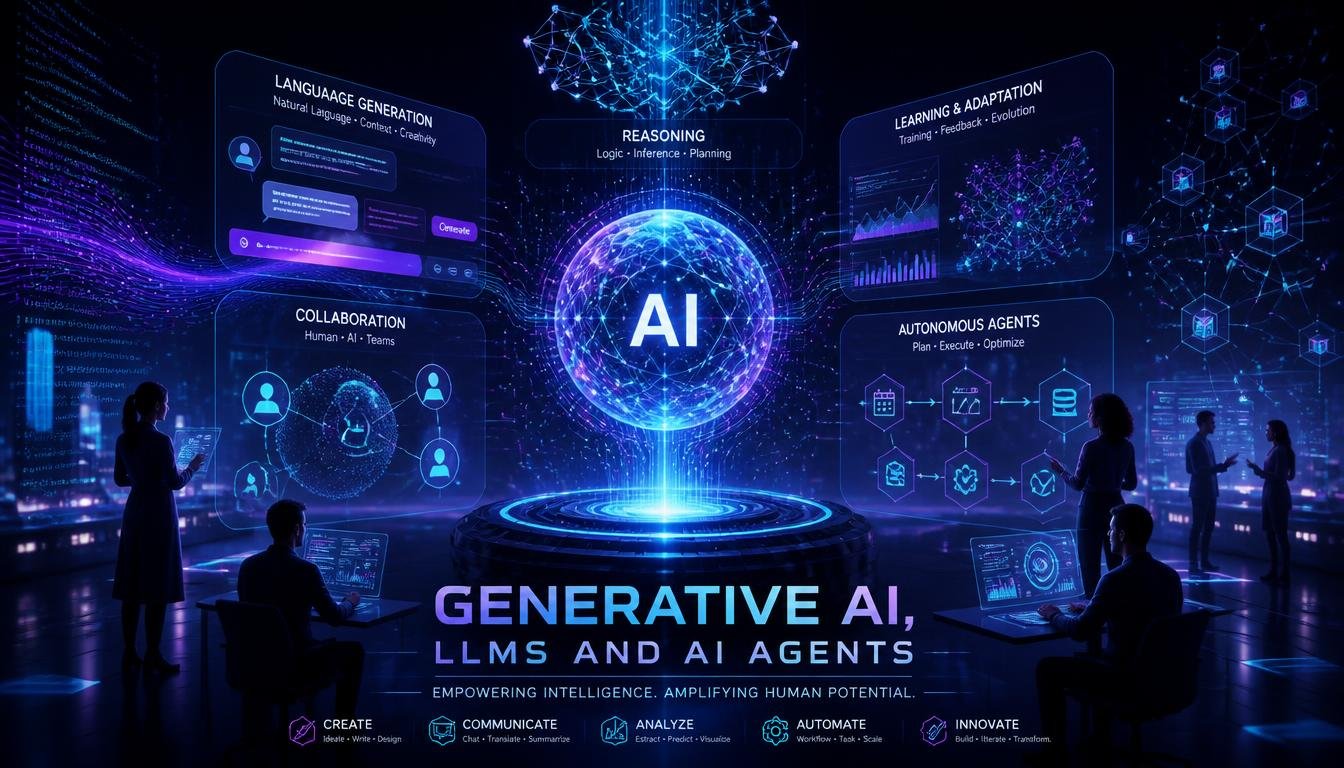
Generative AI is one of the defining technology developments of the current era.
Instead of simply classifying existing information, generative systems can create new outputs. Depending on the model, those outputs may include text, images, music, speech, video or software code.
Tools such as ChatGPT and DALL-E helped popularize this technology with consumers and professionals alike.
A major component of this ecosystem is the Large Language Model (LLM). LLMs are trained on large amounts of language-related data and can perform tasks involving text generation, summarization, question answering, translation, explanation and code generation.
Important applications include:
- Text generation
- Document summarization
- Creative writing
- Language translation
- Question answering
- Code generation
- Conversational AI
- Natural Language Understanding
- Customer service automation
- Research assistance
The next stage is AI Agents.
An ordinary chatbot may answer a question. An agent can potentially take a goal, plan several steps, use APIs, access information, interact with applications and complete actions.
That introduces a new category of software called Agentic AI.
Agentic systems may involve:
- Planning
- Reasoning
- Tool use
- Decision-making
- Environmental perception
- Adaptation
- Memory
- Automated workflows
- Software interaction
- Human approval
This is exciting, but it also makes reliability more important. A chatbot producing an incorrect sentence is one problem. An autonomous system taking an incorrect action is a very different one.
Computer Vision & Multimodal AI
Computer Vision allows computers to interpret visual information.
It is used for:
- Image recognition
- Object detection
- Facial recognition
- Video analysis
- Medical imaging
- Industrial inspection
- Autonomous vehicles
- Security monitoring
- Optical Character Recognition
Optical Character Recognition (OCR) can convert text appearing in images or scanned documents into machine-readable text.
Modern Multimodal AI combines multiple types of information, such as text, images, audio and video.
For example, a multimodal system may receive an image and a written question and then explain what appears in the image.
This combination is important because humans rarely experience information in only one format. We see, hear, read and speak continuously. Technology is gradually becoming better at working with those different information types together.
Gadgets & Consumer Tech
Technology becomes particularly visible when it becomes a physical object.
Consumer technology includes smartphones, tablets, laptops, smartwatches, wireless earbuds, smart displays, cameras, gaming devices and connected home equipment.
Modern gadgets are becoming increasingly dependent on:
- Semiconductors
- Sensors
- CPUs
- GPUs
- Memory
- Cameras
- Touchscreens
- Wireless communication
- Artificial Intelligence
- Cloud services
One notable trend is the movement of AI processing onto devices themselves.
Instead of sending every task to a remote server, some devices can perform certain AI operations locally. This can reduce latency and may offer privacy and connectivity advantages.
The modern gadget is therefore not merely a piece of hardware. It is usually a combination of hardware, operating-system software, applications, cloud services and AI.
Smartphones & Mobile
The smartphone may be the most influential consumer computer ever created.
A modern smartphone combines:
- Computing
- Photography
- Video
- GPS
- Internet access
- Messaging
- Social media
- Mobile applications
- Voice assistants
- Digital payments
- Entertainment
The underlying hardware includes a processor, memory, storage, display, camera system, sensors and wireless communication components.
AI is increasingly embedded into smartphones for:
- Image enhancement
- Translation
- Voice recognition
- Search
- Writing assistance
- Personalization
- Security
- Camera processing
Mobile applications have also transformed communication. Messaging apps, social networks, email platforms and web applications allow people to communicate instantly across enormous distances.
Smartphones are becoming less like telephones and more like portable personal computing environments.
Computers & Hardware
Every digital service eventually depends on physical hardware.
Computer hardware includes processors, memory, storage, motherboards, networking equipment and specialized chips.
The CPU is a general-purpose processor responsible for executing instructions. GPUs are highly parallel processors that have become extremely important for graphics and AI workloads.
Other important hardware components include:
- RAM
- Solid-state storage
- Displays
- Network interfaces
- Sensors
- Power systems
- Semiconductor components
- AI accelerators
The semiconductor industry is particularly important because almost every modern electronic device depends on semiconductor technology.
The demand for AI has also increased interest in specialized processors designed to accelerate machine-learning workloads.
This creates a fascinating relationship between hardware and software: better hardware enables more sophisticated software, while new software demands push hardware designers toward new architectures.
Software & Apps
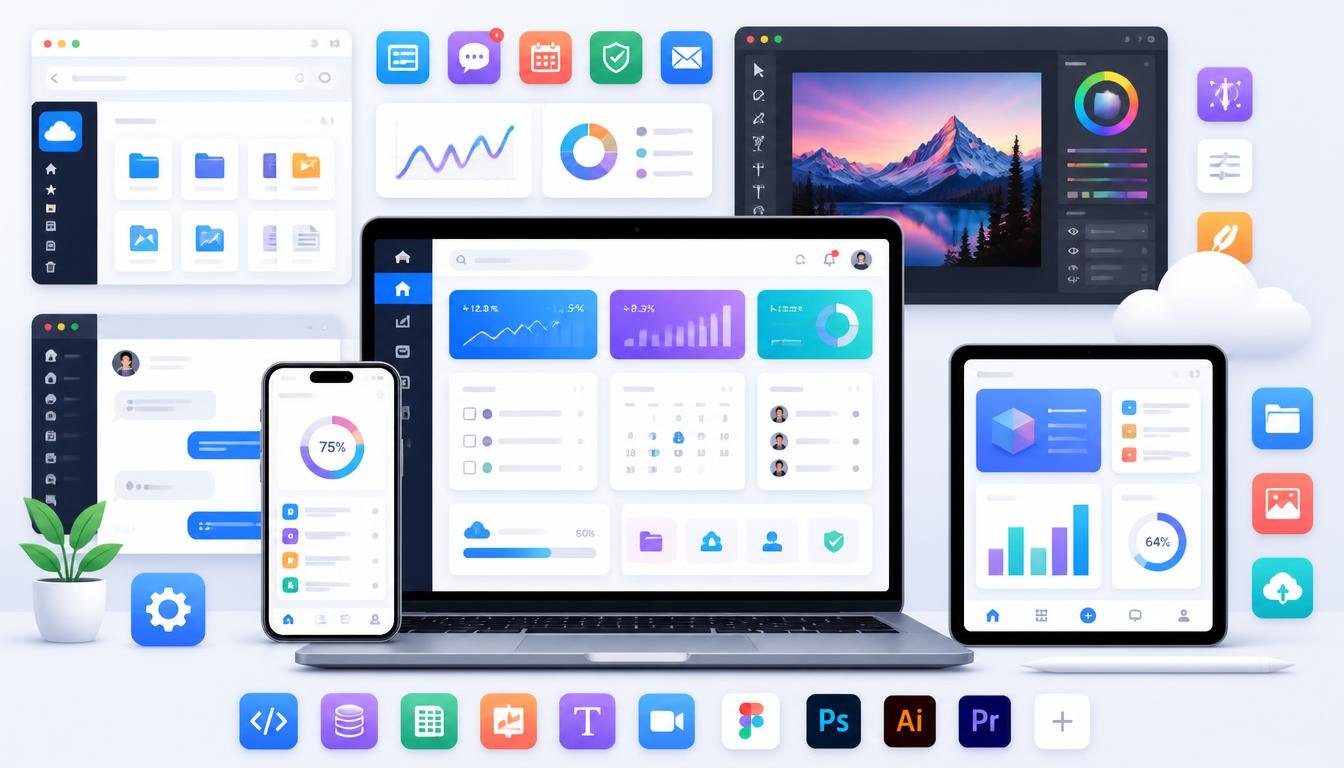
Software is the collection of instructions and digital components that tell computer hardware what to do.
It includes:
- Operating systems
- Application software
- Databases
- Libraries
- Compilers
- Interpreters
- APIs
- Drivers
- Development tools
An Operating System manages hardware resources and provides services that applications depend on.
Application software is what users interact with directly, such as productivity applications, browsers, media tools, games and business platforms.
Modern Software Development follows a broader lifecycle than simply writing code.
It can involve:
- Requirements analysis
- Feasibility analysis
- Software architecture
- Software design
- Programming
- Code review
- Unit testing
- Security testing
- User acceptance testing
- Deployment
- Monitoring
- Maintenance
- Refactoring
- Documentation
AI is now entering many of these stages.
AI coding assistants can generate code, explain unfamiliar functions, identify potential bugs and help create tests. But human developers remain important for architecture, requirements, security, verification and decisions involving business context.
Programming Languages & Software Engineering
Programming Languages allow humans to express instructions in forms that can eventually be executed by computers.
Programming has developed from low-level machine instructions and assembly language toward high-level languages such as C, JavaScript, Python and many others.
A compiler can translate source code into lower-level representations or machine code, while an interpreter can execute or process instructions through a runtime environment.
The broader field of Software Engineering focuses on building reliable and maintainable software.
Important areas include:
- Software architecture
- Code reuse
- Versioning
- Testing
- Debugging
- Refactoring
- Documentation
- Release management
- Quality assurance
- Security
- Maintenance
As software systems become larger, engineering discipline becomes increasingly important.
A program that works on a developer’s laptop is not automatically production-ready. It must often survive real users, unexpected inputs, security threats, failures and future modifications.
Cloud Computing
Cloud Computing changed how organizations access computing resources.
Instead of purchasing every server and managing all infrastructure themselves, organizations can use hosted resources through cloud platforms.
Three important models are:
Software as a Service (SaaS) provides complete applications through the internet.
Infrastructure as a Service (IaaS) provides computing infrastructure such as virtual machines, storage and networking.
Platform as a Service (PaaS) provides tools and environments for developing and deploying applications.
Cloud computing supports:
- Web applications
- Data storage
- Databases
- AI systems
- Business software
- Backup
- Analytics
- Software development
- Remote collaboration
Cloud AI is especially important because advanced models may require substantial computational resources.
Platforms such as Google Cloud provide infrastructure and AI services designed to support these workloads.
The cloud also makes scalability easier. A company can potentially increase computing resources when demand grows rather than permanently purchasing infrastructure for peak usage.
Internet & Networking
The Internet connects billions of devices and systems around the world.
It depends on physical infrastructure including fiber-optic cables, data centers, routers, switches, wireless networks, satellites and telecommunications systems.
Networking involves several important concepts:
- Data packets
- Routing
- DNS
- IP addresses
- Network protocols
- Servers
- Clients
- Bandwidth
- Latency
- Network security
Modern applications also depend heavily on APIs.
An API allows one software system to communicate with another. A mobile application might use an API to retrieve weather information, process payments or access an AI model.
Without APIs, much of today’s interconnected software ecosystem would be considerably more difficult to build.
Wi-Fi & 5G
Wi-Fi provides wireless connectivity over relatively local areas, while cellular technologies such as 5G provide wide-area mobile connectivity.
Wi-Fi is central to homes, offices, schools, hotels and public spaces.
5G can provide high bandwidth, lower latency and greater network capacity in supported deployments.
These technologies are increasingly important for:
- Smartphones
- IoT devices
- Industrial systems
- Connected vehicles
- Smart homes
- Remote work
- Cloud applications
- Real-time services
Future networking will need to support not only people but enormous numbers of connected machines and sensors.
IoT / Smart Home
The Internet of Things (IoT) refers to physical objects equipped with sensors, software and network connectivity.
Examples include:
- Smart thermostats
- Smart lights
- Connected cameras
- Smart locks
- Connected appliances
- Wearable devices
- Industrial sensors
- Connected vehicles
A smart home can automate ordinary routines.
Lights may respond to occupancy. Thermostats can adjust temperatures. Cameras can identify certain events. Appliances can report their status.
AI makes IoT more interesting because connected devices can potentially interpret sensor data rather than simply transmit it.
But connected devices also introduce cybersecurity and privacy challenges.
A device that can be accessed remotely must be secured remotely too. Otherwise, convenience can become an open door.
Cybersecurity & Privacy
As technology becomes more connected, Cybersecurity becomes more important.
Cybersecurity protects:
- Computers
- Networks
- Applications
- Cloud systems
- Databases
- Personal information
- Business systems
- Critical infrastructure
Common threats include:
- Malware
- Phishing
- Ransomware
- Credential theft
- Code injection
- Denial-of-service attacks
- Security vulnerabilities
- Zero-day vulnerabilities
- Social engineering
Security practices include:
- Strong authentication
- Encryption
- Security patches
- Network monitoring
- Vulnerability management
- Backups
- Security testing
- Access controls
Privacy is closely related but not identical to cybersecurity.
A system can be technically secure while still collecting more personal information than people expect.
Modern AI creates additional questions around data collection, model training, surveillance, identity and automated decision-making.
Responsible AI, therefore, requires attention to privacy, accountability, transparency, human oversight and fairness.
Robotics & Automation
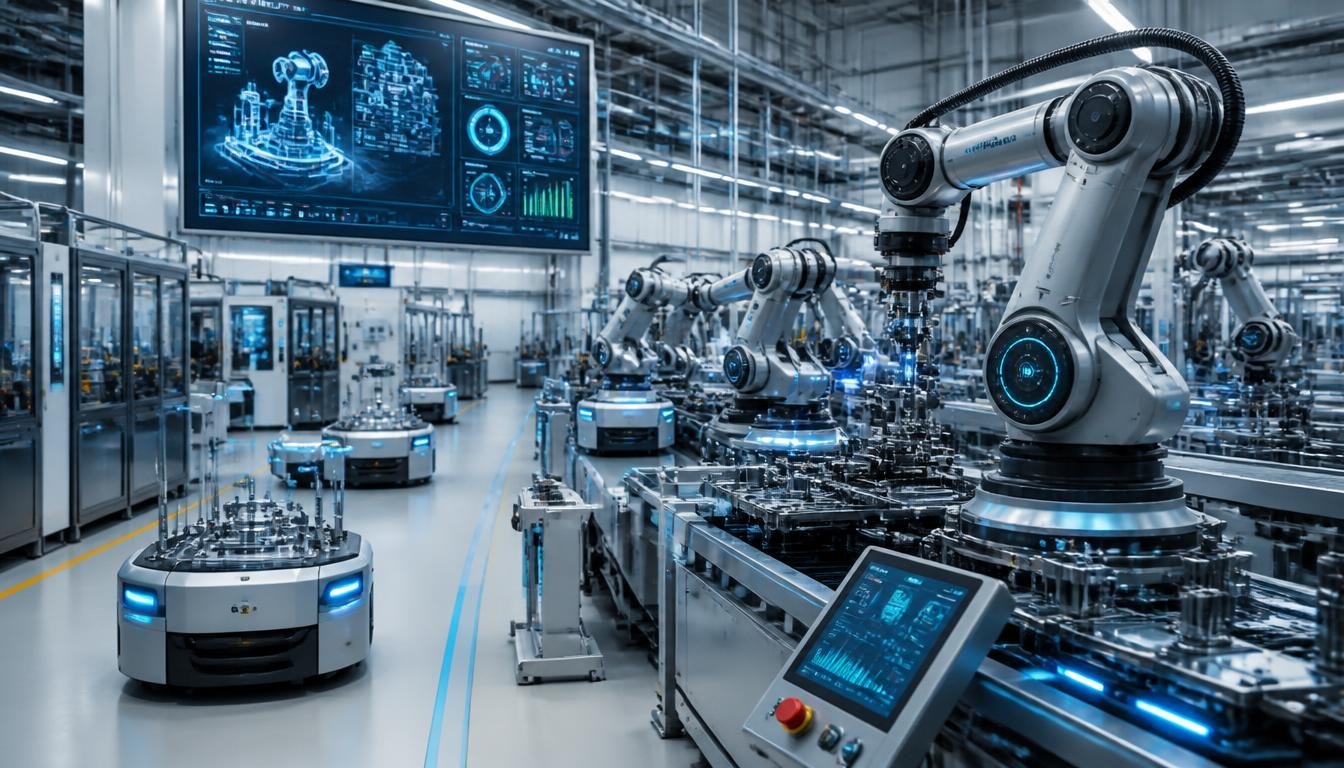
Robotics brings software into the physical world.
Robots combine mechanical systems with sensors, processors, control software and increasingly AI.
Industrial robots can perform repetitive manufacturing tasks. Warehouse robots can move goods. Autonomous machines can operate in environments where continuous human control may be difficult.
Automation is broader than robotics.
Software automation can perform repetitive digital tasks such as:
- Moving data between systems
- Generating reports
- Sending notifications
- Processing documents
- Testing software
- Monitoring systems
- Managing workflows
Intelligent Automation combines automation with AI so systems can handle less structured information.
The development of Physical AI is especially interesting because it attempts to connect perception, reasoning and action with real-world machines.
Autonomous Vehicles
Autonomous Vehicles use combinations of sensors, software, AI and control systems to understand their environment and navigate.
Technologies involved may include:
- Computer Vision
- Radar
- LiDAR
- GPS
- Sensor fusion
- Machine Learning
- Object detection
- Path planning
- Real-time decision-making
The system must identify roads, vehicles, pedestrians, obstacles and other environmental information.
Autonomous transportation is challenging because physical environments are unpredictable. A road can contain unusual objects, poor weather, construction zones and human behavior that is difficult to predict.
For that reason, autonomous systems require extensive testing, safety engineering and carefully defined operating conditions.
VR / AR
Virtual Reality (VR) creates an immersive digital environment.
Augmented Reality (AR) places digital information over the physical world.
Applications include:
- Gaming
- Training
- Education
- Engineering
- Architecture
- Healthcare
- Industrial maintenance
- Product visualization
VR can allow a learner to practice inside a simulated environment. AR can display instructions directly in a worker’s field of view.
These technologies are part of a broader movement toward spatial computing, where digital information interacts more closely with physical environments.
Blockchain
Blockchain is a distributed ledger technology designed to maintain records across participating systems.
Blockchain became widely known through cryptocurrency, but its underlying concepts have also been explored for:
- Digital assets
- Smart contracts
- Tokenization
- Supply chains
- Identity
- Record keeping
A blockchain system may use cryptographic techniques and consensus mechanisms to maintain agreement among participants.
However, blockchain is not automatically better than a conventional database. Important trade-offs can involve scalability, governance, privacy, complexity and energy requirements depending on the implementation.
The useful question is not whether blockchain is “the future.” It is whether its particular properties solve a particular problem better than available alternatives.
Quantum Computing
Quantum Computing represents a fundamentally different approach to computation.
Classical computers use bits represented as 0 or 1. Quantum computers use qubits, which can exist in quantum states involving superposition.
Other important concepts include:
- Superposition
- Entanglement
- Quantum gates
- Quantum algorithms
- Quantum error correction
- Hybrid computing
Quantum computing may eventually be useful for specialized problems involving simulation, optimization, chemistry and cryptography.
But it is not simply a faster replacement for every ordinary computer.
The practical future is more likely to involve combinations of classical and quantum computing, especially while the technology continues developing.
Another important area is post-quantum cryptography, which focuses on cryptographic methods designed to remain secure against potential future quantum attacks.
Business Technology
Businesses increasingly depend on technology for nearly every operational function.
Technology supports:
- Accounting
- Marketing
- Customer service
- Manufacturing
- Logistics
- Human resources
- Sales
- Research
- Cybersecurity
- Decision support
Data Analytics allows organizations to examine large datasets and identify relationships.
Predictive Analytics uses historical information and statistical or machine-learning methods to estimate future patterns.
AI can also support:
- Fraud detection
- Customer service automation
- Personalized marketing
- Supply-chain optimization
- Document processing
- Business intelligence
- Workflow automation
The most successful technology adoption usually begins with a business problem rather than a fashionable technology label.
Digital Transformation
Digital Transformation means redesigning organizational processes around digital technologies.
It can involve:
- Cloud migration
- Automation
- Data platforms
- AI adoption
- Modern applications
- Digital customer services
- Cybersecurity modernization
- Process redesign
Simply purchasing new software is not digital transformation.
If employees still have to copy information manually between three disconnected systems, adding a fourth dashboard probably hasn’t solved much.
Successful transformation often requires changes to people, processes, technology and organizational culture at the same time.
Remote Work & Productivity
Remote work depends heavily on digital infrastructure.
Important technologies include:
- Video conferencing
- Cloud documents
- Project-management applications
- Messaging platforms
- Digital calendars
- Virtual desktops
- Cloud storage
- AI productivity assistants
AI is increasingly being used to summarize meetings, organize documents, generate drafts, analyze information and automate routine workflows.
The larger productivity trend is moving from software that simply stores information toward software that helps users process it.
That shift could be significant because modern workers spend enormous amounts of time searching, organizing and interpreting information.
Future Technology

The future of technology is difficult to predict with certainty, but several directions are visible.
AI Agents may become more capable of completing multi-step digital workflows.
Physical AI may make robots more adaptable.
Digital Twins may allow organizations to simulate physical assets and processes.
Smart Factories may combine sensors, robotics, AI and real-time analytics.
Autonomous Systems may become increasingly capable in controlled environments.
Advanced Materials may improve energy systems, electronics and manufacturing.
Quantum Computing may develop toward practical specialized workloads.
Other emerging areas include:
- Nanotechnology
- Advanced semiconductor technology
- Biotechnology
- Personalized medicine
- Energy technology
- 3D printing
- Autonomous transportation
- Advanced telecommunications
The future will likely be less about one magical invention and more about multiple technologies becoming interconnected.
Technology Benefits & Challenges
Technology offers enormous benefits.
Major Technology Benefits
- Automation can reduce repetitive work.
- AI can process large quantities of information quickly.
- Software can increase productivity.
- Cloud platforms provide scalable infrastructure.
- Digital communication connects people globally.
- Data analytics can reveal patterns hidden in large datasets.
- Robotics can perform dangerous or repetitive tasks.
- AI can accelerate research and development.
- Digital services can improve access to information.
- Smart systems can optimize energy and resource use.
But technological progress also creates serious challenges.
Major Technology Challenges
- Algorithmic Bias can produce unfair outcomes.
- Poor-quality data can lead to inaccurate predictions.
- AI systems can generate misleading information.
- Cyberattacks can target increasingly connected infrastructure.
- Privacy can be weakened through excessive data collection.
- Automation can change employment requirements.
- Powerful AI can be misused.
- Advanced systems may be difficult to explain.
- Technology dependence can create vulnerabilities when systems fail.
- Large-scale computing can require substantial energy and infrastructure.
This is why AI Ethics, AI Safety, cybersecurity, governance and human oversight are becoming increasingly important.
Technology should not merely be powerful. It should also be understandable enough to evaluate, secure enough to trust and controlled enough to use responsibly.
AI Ethics, Safety & Responsible Innovation
The rapid development of AI has created a parallel field focused on how these systems should be designed and deployed.
Important concerns include:
- AI bias
- Privacy
- Transparency
- Accountability
- Human oversight
- Data rights
- AI misuse
- Autonomous decision-making
- Security
- Safety-critical systems
A responsible AI system should be evaluated according to the environment in which it will operate.
A harmless mistake in a creative-writing application may be annoying. A similar mistake in medical diagnosis, financial decisions or autonomous transportation could have much more serious consequences.
That is why AI governance is increasingly becoming part of technology development rather than something considered after deployment.
Technology History: From Early Computers to Modern AI
Modern technology has a surprisingly long history.
The development of programmable computing was influenced by mathematical logic, engineering and early mechanical computation.
Alan Turing played a foundational role in theoretical computer science and introduced the idea now associated with the Turing Test.
The field of AI was formally named and organized as a research discipline during the Dartmouth Summer Research Project in 1956, associated with researchers including John McCarthy.
Early AI systems included programs such as ELIZA, while robotics research produced systems such as Shakey the Robot.
There were periods of great optimism followed by periods now commonly described as AI Winters, when funding and enthusiasm declined.
Later advances in computing power, large datasets and neural networks contributed to the modern Deep Learning Revolution.
The history of technology shows a repeating pattern: ambitious expectations, technical limitations, gradual improvements, sudden breakthroughs and then another round of expectations.
The present AI boom is part of that longer history rather than something that appeared from nowhere.
Software Quality, Security & Maintenance
Modern software is not finished when the code first runs.
Software Quality involves reliability, security, usability, maintainability and performance.
Software development teams may use:
- Unit testing
- Integration testing
- Automated testing
- Security testing
- Code review
- Monitoring
- Debugging
- Refactoring
- Version control
Software Maintenance is especially important because applications may operate for years.
During that period, developers may need to fix bugs, patch security vulnerabilities, update dependencies, improve performance and adapt the software to new requirements.
AI-generated code makes these issues even more relevant. Generating code can become faster, but reviewing, testing and maintaining that code remains necessary.
Open-Source Software
Open-Source Software allows source code to be viewed, modified or redistributed according to the applicable license.
Open-source technology has become a major foundation of modern computing.
It supports:
- Operating systems
- Web servers
- Databases
- Programming languages
- Development frameworks
- AI tools
- Cloud infrastructure
Open source encourages collaboration and code reuse, but it still involves responsibilities.
Organizations need to understand licenses, dependencies, security vulnerabilities algorithms, data, processors and software infrastructure. Robotics depends on mechanical engineering, sensors, control systems and machine learning. Smart factories combine all of these far away.
Pieces of that future are already here: intelligent applications, cloud platforms, connected homes, smart factories, autonomous systems, AI assistants, slowly, sometimes with a sudden jump that makes the previous year look ancient.
The people and organizations best prepared for that change will not necessarily be the ones chasing every new buzzword. They will be the ones who understand the underlying ideas, ask sensible questions, protect their data, test new systems carefully and maintenance.
Not every open-source project has the same support model or security posture, so careful evaluation remains important.
Technology in Healthcare

Healthcare is increasingly influenced by AI, software, data analytics and connected devices.
Applications include:
- Medical imaging
- Medical diagnosis support
- Drug discovery
- Personalized medicine
- Genome analysis
- Patient monitoring
- Administrative automation
Computer Vision can assist with image analysis, while machine learning can identify patterns in medical datasets.
However, healthcare is also an example of why technology requires careful validation.
Medical systems operate in safety-critical environments, so accuracy, privacy, human oversight and regulatory requirements matter greatly.
Technology in Transportation
Transportation technology includes navigation systems, connected vehicles, autonomous driving, aviation systems and logistics platforms.
Modern navigation depends on:
- GPS
- Digital maps
- Real-time traffic information
- Cloud services
- Mobile networks
- Data analytics
Applications such as Google Maps have made location-based digital services part of ordinary daily life.
Autonomous transportation pushes the technology further by combining sensors, AI, computer vision and real-time decision-making.
Technology in Manufacturing
Manufacturing is becoming increasingly digital.
A modern factory can use:
- Robotics
- Sensors
- AI
- Industrial networks
- Digital twins
- Predictive maintenance
- Real-time analytics
- Automated quality inspection
A Smart Factory can continuously collect information about machines and production processes.
Machine-learning systems can sometimes identify patterns associated with equipment failure before the failure occurs.
Digital twins can provide digital representations of physical equipment or processes, allowing organizations to simulate changes and analyze performance.
Technology in Agriculture
Technology is also transforming agriculture.
Applications include:
- Precision farming
- Automated irrigation
- Crop monitoring
- Satellite imagery
- Drone imaging
- Soil sensors
- Predictive analytics
- Autonomous agricultural machines
AI and computer vision can help identify crop conditions, while connected sensors can provide information about soil moisture and environmental conditions.
The broader goal is to make agricultural operations more data-driven and resource-efficient.
Technology in Communication
Communication technology has evolved from traditional telephones to an ecosystem involving smartphones, messaging applications, email, video calls, social media, forums, blogs and collaborative platforms.
Telecommunications infrastructure now supports not just human communication but machine-to-machine communication.
The combination of smartphones, cloud platforms, AI and high-speed networks is creating increasingly conversational digital experiences.
Voice assistants such as Siri and Alexa demonstrated the appeal of speaking naturally to computers. Newer AI systems are expanding this idea through more capable conversational and multimodal interfaces.
Technology and the Internet of Information
The internet began largely as a way to connect computers and share information.
It has gradually become infrastructure for:
- Commerce
- Education
- Entertainment
- Communication
- Banking
- Software
- Artificial Intelligence
- Cloud computing
- Digital government
- Remote work
Search engines, online encyclopedias such as Wikipedia, web applications and social platforms have created a massive digital information environment.
AI is now becoming another layer over that environment, helping users search, summarize and interact with information conversationally.
How to Choose Technology Wisely
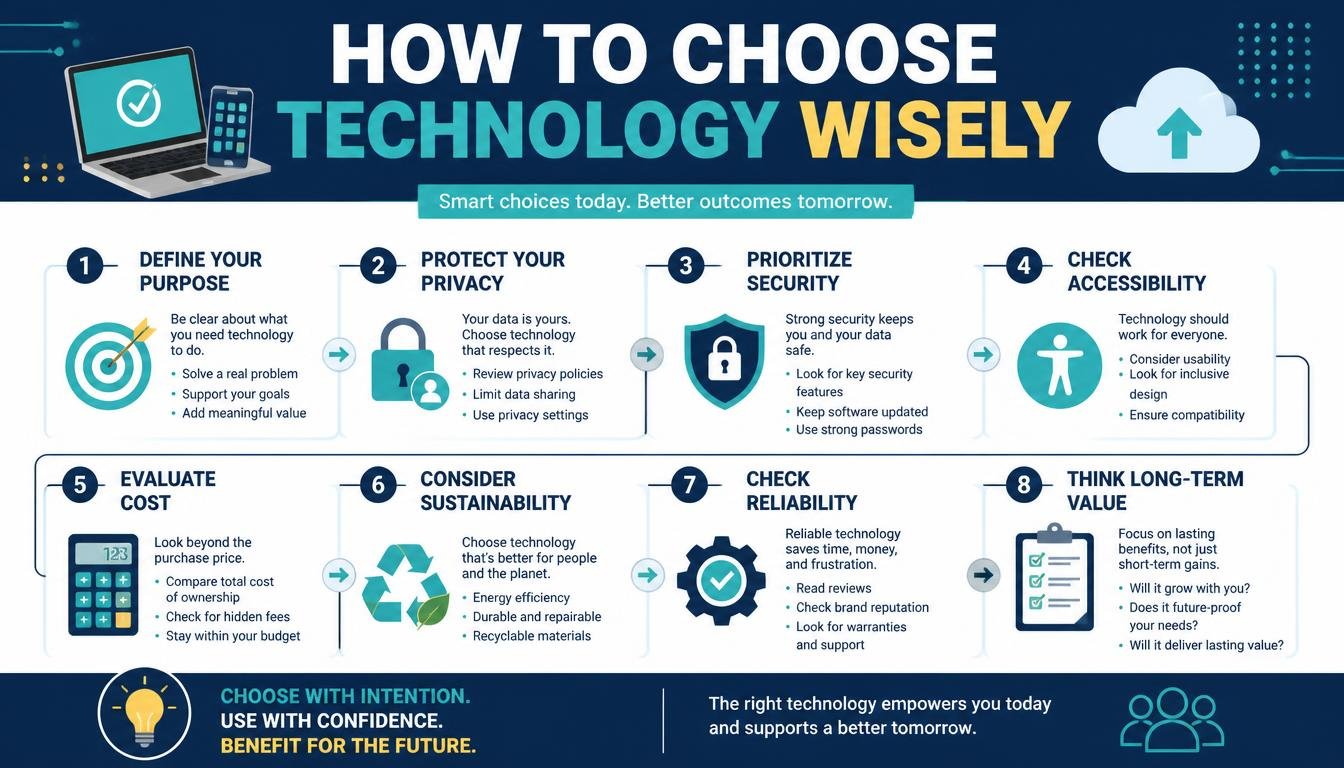
More technology is not automatically better technology.
Before adopting a new tool, ask:
- What real problem does it solve?
- Does it save meaningful time?
- Is the data secure?
- What information does it collect?
- Can it integrate with existing systems?
- What happens if the service becomes unavailable?
- Is human oversight required?
- What are the long-term costs?
- Can employees learn to use it properly?
- Is there a simpler solution?
This way of thinking is especially important with AI.
A system may look impressive during a demonstration and still provide limited value in everyday use. Real-world reliability matters more than a flashy demo.
Frequently Asked Questions
What is technology?
Technology is the practical application of knowledge, engineering and tools to solve problems or accomplish tasks. It includes physical technologies such as machines and electronics as well as digital technologies such as software, AI and networks.
What is Artificial Intelligence?
Artificial Intelligence refers to computer systems designed to perform tasks involving capabilities such as pattern recognition, prediction, language processing, perception and decision support.
What is Machine Learning?
Machine Learning is an approach within AI where systems learn patterns from data and use those patterns to make predictions, classifications or other outputs.
What is Deep Learning?
Deep Learning uses multi-layer neural networks to process complex patterns. It has become particularly important in computer vision, speech recognition and modern generative AI.
What is Generative AI?
Generative AI creates new content such as text, images, audio, video and code based on learned patterns and user inputs.
What are Large Language Models?
LLMs are machine-learning models designed to process and generate human language. They can support writing, translation, summarization, question answering, coding and conversational applications.
What is Agentic AI?
Agentic AI refers to systems designed to pursue goals through planning, reasoning, tool use and action. They may interact with external software or APIs rather than simply returning a text response.
What is Cloud Computing?
Cloud computing provides computing resources such as storage, servers, databases and software through network-based services.
What are SaaS, IaaS and PaaS?
SaaS provides complete software applications, IaaS provides infrastructure resources, and PaaS provides platforms and services for developing applications.
What is IoT?
The Internet of Things connects physical devices and sensors to networks so they can collect, transmit and sometimes act on data.
What is cybersecurity?
Cybersecurity protects digital systems, networks, applications and data against unauthorized access, disruption, theft and manipulation.
What is blockchain?
Blockchain is a distributed ledger technology that can maintain records across participating systems using cryptographic and consensus mechanisms.
What is quantum computing?
Quantum computing uses qubits and quantum-mechanical principles to perform certain types of computation differently from classical computers.
Will AI replace software developers?
AI can automate or accelerate some programming activities, but software engineering also involves architecture, requirements, testing, security, maintenance and human judgment.
The role of developers is likely to continue changing as AI becomes more integrated into development workflows.
Is AI always accurate?
No. AI systems can produce inaccurate or misleading outputs. Their performance depends on model design, training data, inputs, evaluation and deployment conditions.
Why is data important in AI?
Data provides examples from which machine-learning systems learn patterns. Poor-quality, incomplete or biased data can negatively affect model performance.
What is digital transformation?
Digital transformation involves using digital technologies to redesign processes, services and organizational operations rather than simply purchasing new software.
What are digital twins?
A digital twin is a digital representation of a physical object, system or process that can be used for monitoring, simulation or analysis.
What are smart factories?
Smart factories combine connected sensors, software, robotics, AI, automation and analytics to improve manufacturing operations.
What is edge computing?
Edge computing processes some information closer to where it is generated rather than sending everything to a distant cloud environment.
What is the future of technology?
The future is likely to involve deeper integration among AI, cloud computing, robotics, networking, advanced hardware, cybersecurity, quantum technologies, automation and connected physical systems.
What is technology?
Technology is the practical use of scientific knowledge, tools, and systems to solve problems, improve efficiency, and make everyday life easier.
Technology examples
Technology examples include smartphones, computers, the internet, artificial intelligence, medical devices, electric vehicles, and smart home systems.
Example of technology
A smartphone is a common example of technology because it combines communication, computing, internet access, photography, and many digital services in one device.
Examples of technology
Examples of technology include laptops, smartphones, cloud computing, robots, renewable energy systems, GPS, 5G networks, and artificial intelligence.
Conclusion: Understanding Technology in a Rapidly Changing World
Technology has become too interconnected to understand through individual gadgets alone.
A smartphone depends on semiconductors, operating systems, applications, wireless networks and cloud services. AI depends on algorithms, data, processors and software infrastructure.
Robotics depends on mechanical engineering, sensors, control systems and machine learning. Smart factories combine all of these ideas in one physical environment.
That is why the most important Technology Trends are increasingly about connections.
Artificial Intelligence is connecting with Machine Learning, Deep Learning, Natural Language Processing, Computer Vision and Generative AI. AI agents are connecting models with tools and APIs.
Cloud computing is providing the infrastructure. Semiconductors are providing the computational foundation. Robotics is bringing intelligence into the physical world.
At the same time, Cybersecurity, privacy, AI ethics and responsible innovation are becoming essential because powerful technology also creates powerful risks.
The future should not be understood as a collection of science-fiction gadgets waiting somewhere far away.
Pieces of that future are already here: intelligent applications, cloud platforms, connected homes, smart factories, autonomous systems, AI assistants, advanced smartphones and increasingly capable software.
The real challenge is learning how these pieces fit together.
Technology will continue to change sometimes slowly, sometimes with a sudden jump that makes the previous year look ancient.
The people and organizations best prepared for that change will not necessarily be the ones chasing every new buzzword.
They will be the ones who understand the underlying ideas, ask sensible questions, protect their data, test new systems carefully and use innovation where it genuinely creates value.
That is ultimately what Technology Explained should be about: not simply knowing what is new, but understanding why it matters, how it works, where it can help, what can go wrong and what may come next.